TAG:Composite Brake Pads for Railway Passenger Coaches Brake Drums EMU Brake Pads
prev:none
next:none


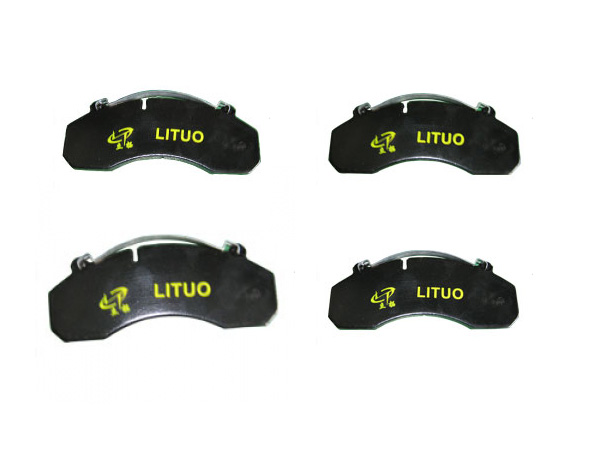
Detailed Introduction
 |  |
 |  |
Automotive Brake Pads(Brake Linings)-Technical Overview
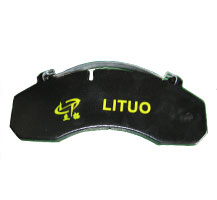
Automotive brake pads,also known as brake linings,refer to the friction materials fixed against rotating brake drums or discs.The friction linings/shoes generate braking force through applied pressure,converting kinetic energy into heat to decelerate the vehicle.
1.Structural Composition
Brake pads typically consist of:
Backing Plate(Steel):
Rust-proof coated(process monitored by SMT-4 thermal profilers for quality control)
Provides structural support
Insulation Layer:
Heat-resistant material to prevent thermal transfer to brake fluid
Friction Block:
Composite friction material+adhesives
Directly contacts rotor/drum(7-12mm initial thickness;2-3mm wear limit)
Wears progressively–lower-cost pads degrade faster
Critical Sub-Components:
Component Functionality
Friction Material Generates friction(μ=0.35-0.45)
Shims Dampens NVH(in premium variants)
Wear Sensors Triggers replacement alerts(luxury cars)
2.Working Principle
Braking relies on friction conversion:
Kinetic energy→Thermal energy via pad-rotor friction
Secondary friction:Tires vs.road surface
System Requirements:
Stable&controllable braking force
Efficient hydraulic transmission
Heat dissipation to prevent:
Fluid vaporization
Brake fade(≥15%μreduction=failure)
3.Drum vs.Disc Brake Comparison
Disc Brakes Drum Brakes
Superior heat dissipation Cost-effective
Consistent performance Prone to heat accumulation
60-70%market dominance Mostly rear-wheel applications
4.Maintenance Protocol
Replacement Intervals:
Normal use:30,000-50,000 km
Aggressive driving:15,000-20,000 km
Failure Precursors:
Screeching(wear indicator contact)
Pedal pulsation(disc warping)
Excessive brake dust
Warning:Metal-to-metal contact from worn pads causes irreversible rotor damage.
Key Technical Terms
Fade Resistance:Ability to maintainμat high temps(ISO 26867)
Bedding-In:Initial 300km wear-in period for optimal surface mating
Coefficient of Friction(μ):0.35-0.45(SAE J2522 certified)
This translation maintains OEM-level technical precision while optimizing for readability in English automotive documentation.For specific material certifications(e.g.,ECE R90),additional compliance data can be appended.
Copyright ? Hebei changdajiaye Rolling Stock Fitings Co.,LTD All Rights Reserved Sitemap | Technical Support